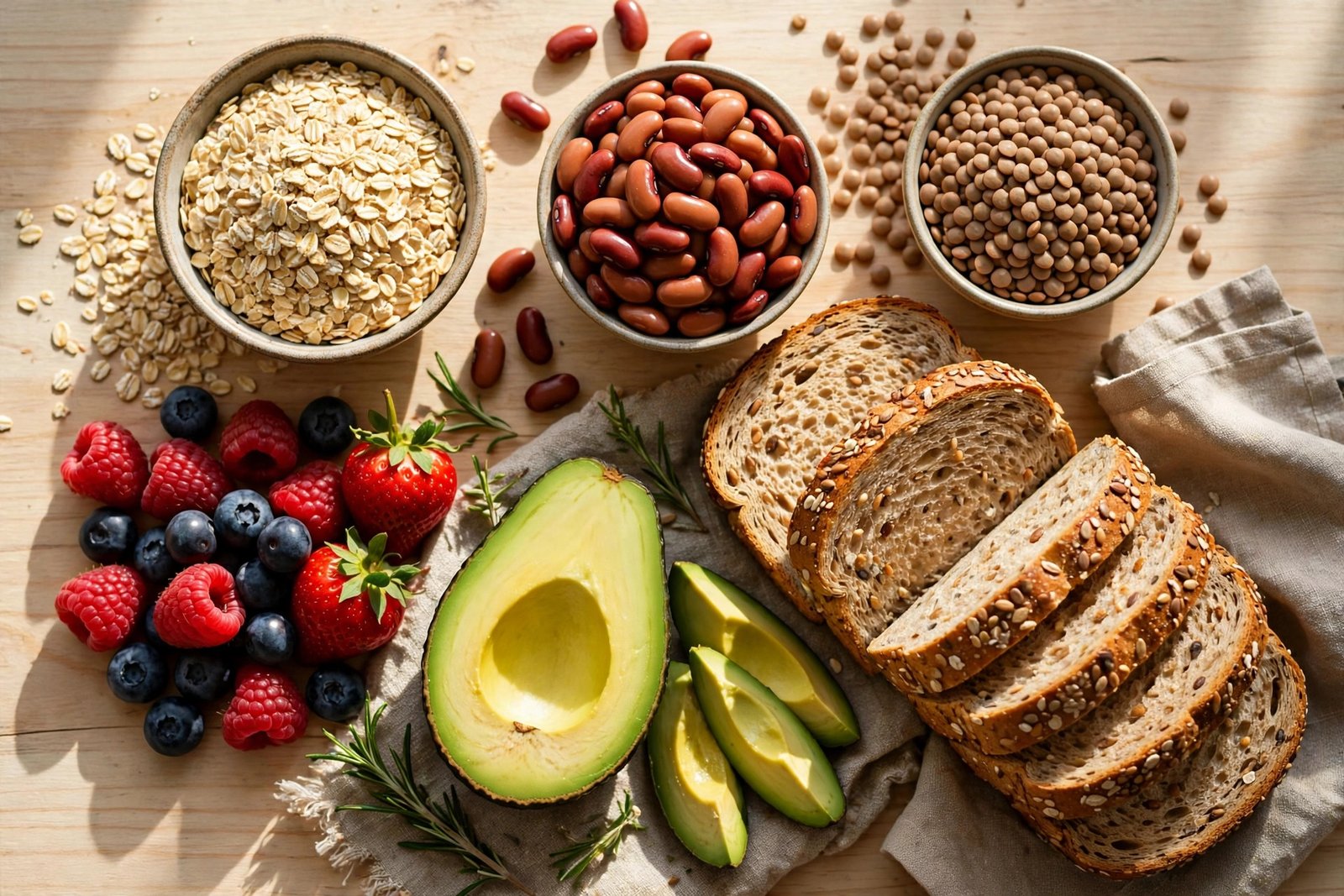
In short: fibermaxxing means eating about 30 grams of fibre a day from real food, to feel fuller for longer and keep your energy steadier.
- Thirty grams a day is the UK recommendation for adults (Scientific Advisory Committee on Nutrition, Carbohydrates and Health, 2015). In the US the advice is around 25 grams a day for women and 38 for men, so 30 lands neatly in the middle.
- Most adults eat only 15 to 20 grams a day, roughly half of what is recommended, so most of us have room to add fibre without cutting anything out.
- The biggest fibre wins per serving are beans and lentils, with about 12 to 15 grams per cup cooked, followed by whole grains, berries, vegetables, nuts and seeds.
- Build up slowly: add about 5 grams a day each week and reach 30 in about three weeks, and drink more water as you go, because fibre soaks up water to do its job.
- Fibre can modestly support your body’s own GLP-1, but it is not a replacement for GLP-1 medication. The effect from food is modest, and the effect from a drug is powerful and deliberate.
If you have ever finished lunch and felt hungry again by three o’clock, you know the problem this trend tries to solve. It is not a strict diet. It just means eating more fibre on purpose, usually around 30 grams a day.
Most of us do not get nearly enough fibre. The average adult in the UK and the US eats only about 15 to 20 grams a day, roughly half of what is recommended.
What Is Fibermaxxing?
Direct answer: fibermaxxing is a social media word for maximising your fibre intake, usually with a target of about 30 grams a day from whole foods.
You pick a daily target and build your meals around foods that get you there.
Why 30 grams? In the UK, that is the recommended daily amount for adults. In the US the advice is around 25 grams a day for women and 38 for men, so 30 lands neatly in the middle. Aim for it most days, not perfectly every day.
It works by adding food, not taking it away, so you snack less without trying so hard.
This is not a supplement challenge either. Start with real food, and only think about supplements if a doctor or dietitian suggests it.
Why Fibre Helps With Weight Loss
Direct answer: fibre helps weight loss by keeping you full for longer, so eating a little less feels much easier.
Fibre does not melt fat. What it does is make a smaller meal feel satisfying, and staying full enough to stick with it is the hard part of weight loss for most people.
Fullness that lasts
Fibre adds bulk without adding many calories, so your stomach actually has something in it. High fibre foods take longer to chew and digest, which gives your body time to notice you have eaten.
Soluble fibre, the kind in oats, beans and apples, soaks up water and slows digestion down.
Steadier blood sugar, fewer cravings
Food with very little fibre, like white bread or a sugary drink, can send your blood sugar up fast and then crashing down. That crash is often when cravings hit.
Fibre slows the whole process down, so your energy stays steadier and cravings ease.
Our calories calculator can help you set a realistic daily target.
Fibre and Natural GLP-1: What Is True and What Is Hype
Direct answer: fibre can modestly support your body’s own GLP-1, but it is not a replacement for GLP-1 medication.
You have probably seen claims that fibermaxxing boosts GLP-1 naturally, almost like a food version of weight loss medication.
GLP-1 is a hormone your gut releases after you eat. It tells your brain you are full, slows how fast your stomach empties, and helps steady blood sugar. Medicines like semaglutide copy this hormone at far stronger levels than food could ever produce.
What fibre can do is give your own GLP-1 a gentle nudge. When gut bacteria ferment fibre, they stimulate the cells that release GLP-1 and a related fullness hormone called PYY.
What fibre cannot do is replace GLP-1 medication. The effect from food is modest, and the effect from a drug is powerful and deliberate. If you take a GLP-1 medicine, think of fibre as a helpful teammate, not a substitute. Talk to your doctor before making big diet changes on any medication. For the full picture on the medicines, read our guide to GLP-1 weight loss explained.
How Much Fibre Do You Need a Day?
Direct answer: about 30 grams a day is a good target for most adults.
If you are wondering where you stand now, our dietary fibre intake calculator can give you a quick estimate. If you are starting from around 15 grams, do not jump straight to 30 tomorrow. Add about 5 grams a day each week, and reach 30 in about three weeks.
High Fibre Foods: What to Eat
Direct answer: beans, lentils and chickpeas give you the most fibre per serving, followed by whole grains, berries, vegetables, nuts and seeds.
All values below are approximate, since fibre varies with brand, size and cooking.
| Food | Serving | Fibre (approx.) |
|---|---|---|
| Lentils, cooked | 1 cup | about 15g |
| Black beans, cooked | 1 cup | about 15g |
| Kidney beans, cooked | 1 cup | about 13g |
| Chickpeas, cooked | 1 cup | about 12g |
| Raspberries | 1 cup | about 8g |
| Pear, with skin | 1 medium | about 6g |
| Wholemeal bread | 2 slices | about 5g |
| Quinoa, cooked | 1 cup | about 5g |
| Broccoli, cooked | 1 cup | about 5g |
| Oats, dry | half a cup | about 4g |
| Apple, with skin | 1 medium | about 4g |
| Chia seeds | 2 tablespoons | about 10g |
| Almonds | small handful | about 4g |
Legumes beat everything else, whole grains are the easiest swap, and fruit is best eaten whole, since juice strips most of the fibre away.
If beans are new to you, start with a few spoonfuls.
A Sample Day With About 30g of Fibre
Direct answer: yes, 30 grams fits into a normal day. Here is one way it adds up.
This is just an example, so adjust the portions to your appetite.
| Meal | What to eat | Fibre (approx.) |
|---|---|---|
| Breakfast | Porridge from half a cup of dry oats, half a cup of raspberries, 1 tablespoon of chia seeds | about 10g |
| Lunch | Lentil soup with a slice of wholemeal bread | about 13g |
| Snack | A medium apple with a small handful of almonds | about 8g |
| Dinner | Chicken or tofu with quinoa, broccoli and half a sweet potato | about 11g |
That adds up to roughly 40 grams, so eating about three quarters of these portions lands you close to 30 grams.
Our basal metabolic rate calculator can help you set a sensible target from here.
How to Increase Fibre Gradually
Direct answer: add about 5 grams a day each week, and drink more water as you go.
Your gut bacteria need time to adjust, so go slowly.
- Week 1, fix breakfast. Swap sugary cereal for porridge or wholemeal toast and add some berries.
- Week 2, add legumes twice. A few spoonfuls of beans or lentils in a soup or salad is enough to start.
- Week 3, upgrade snacks and sides. Swap crisps for popcorn or an apple with nuts, and add an extra vegetable to dinner.
- Week 4, take stock. Check your intake with the dietary fibre intake calculator and add one more high fibre food a day if you are still short.
Fibre soaks up water to do its job, and without enough fluid it can make constipation worse. Drink a glass of water with each meal and sip through the day.
Eat the skin on fruit and potatoes when you can, and rinse canned beans well before eating them.
Bloating and Side Effects
Direct answer: mild bloating is common in the first week or two, and it usually settles as your gut adapts.
Bloating and a bit of wind happen because gut bacteria ferment fibre and produce gas. It is normal, and it usually fades within a couple of weeks.
Build up gradually, drink enough water, and eat slowly. If one food gives you trouble, eat a smaller portion rather than giving up on fibre altogether.
See a doctor if bloating is severe or painful, does not settle after a couple of weeks, or comes with ongoing diarrhoea, constipation, blood in your stool, or unexplained weight loss.
Who Should Be Careful With Fibermaxxing
Direct answer: most healthy adults can fibermax safely, but check with a doctor first if you have a gut condition or take regular medication.
If you have a gut condition like IBS, Crohn’s disease, ulcerative colitis or diverticulitis, a sudden jump in fibre can make symptoms worse. It really is individual, so talk to your doctor or a dietitian first.
After bowel surgery or during a flare up, doctors often recommend a low fibre diet. Do not start fibermaxxing then unless your doctor says it is safe.
Medication is another one to check. Fibre can affect how some medicines are absorbed, including certain thyroid, cholesterol and diabetes medicines. If you take anything regularly, ask your doctor or pharmacist whether more fibre could interfere with it.
And if tracking food or hitting a daily number tends to make you anxious, or you have a history of disordered eating, a strict fibre target might do more harm than good. Forget the number and focus on a varied diet. Children, frail older adults, and women who are pregnant or breastfeeding have different fibre needs too, so check with a doctor or midwife first.
The Bottom Line
Fibermaxxing is a sensible idea with a silly name. Eating around 30 grams of fibre a day from real food can help you feel fuller, keep your energy steadier, and look after your gut. It works by adding foods, not taking them away, which is why people stick with it.
Start where you are, add a little each week, drink your water, and build meals around beans, lentils, oats, whole grains, fruit and veg. If you have a gut condition or take regular medication, check with your doctor first. Fibre helps, but it is not a guarantee. The best way of eating is the one you enjoy enough to keep doing.
Frequently Asked Questions
What is fibermaxxing?
Fibermaxxing means eating more fibre on purpose, usually around 30 grams a day, from foods like beans, lentils, oats, whole grains, fruit and vegetables.
Is 30g of fibre a day enough for weight loss?
Thirty grams a day is a sensible target, and it can help by keeping you fuller for longer and steadying your blood sugar. Fibre alone does not guarantee weight loss, though. Your overall calories and consistency still matter.
Does fibre really boost GLP-1 naturally?
Fibre can modestly support your body’s own GLP-1 release. The effect is much smaller than GLP-1 medication, and fibre is not a replacement for prescribed treatment.
What are the best high fibre foods for weight loss?
Beans, lentils and chickpeas give you the most fibre per serving, with about 12 to 15 grams per cup cooked. Oats, wholemeal bread, quinoa, raspberries, pears, broccoli, avocados and chia seeds are also great choices.
Why does more fibre cause bloating, and how can I avoid it?
Bloating happens because gut bacteria ferment fibre and produce gas, especially when your fibre intake jumps suddenly. Build up by about 5 grams a day each week, drink enough water, eat slowly, and rinse canned beans before eating them.
Sources
- Scientific Advisory Committee on Nutrition. “Carbohydrates and Health.” 2015. The UK government report that set the recommendation of 30 grams of fibre a day for adults. https://assets.publishing.service.gov.uk/government/uploads/system/uploads/attachment_data/file/445503/SACN_Carbohydrates_and_Health.pdf
- Reynolds A, Mann J, Cummings J, Winter N, Mete E, Te Morenga L. “Carbohydrate quality and human health: a series of systematic reviews and meta-analyses.” The Lancet. 2019;393(10170):434-445. Found the greatest risk reduction when daily fibre intake was between 25 and 29 grams. https://pubmed.ncbi.nlm.nih.gov/30638909/
- NHS. “How to get more fibre into your diet.” Government guidelines say fibre intake should increase to 30 grams a day, while most adults eat about 20 grams a day. https://www.nhs.uk/live-well/eat-well/digestive-health/how-to-get-more-fibre-into-your-diet/
Medical Disclaimer
This article is general information only. It is not medical advice, and it is not a substitute for advice from a qualified health professional. Talk to your doctor, or a registered dietitian, before changing your diet, especially if you have a digestive condition, take regular medication, are pregnant or breastfeeding, or have a history of disordered eating.