
If you have ever entered your age, height and weight into a calorie calculator, you have already met BMR and TDEE. These two numbers sit behind almost every calorie target online. They are not exact, but they are a useful starting point. Test your target for a few weeks, then adjust it.
What Is BMR?
BMR stands for basal metabolic rate. It is an estimate of how many calories your body would burn in a day if you rested completely and did nothing at all. No walking, no talking, no exercise. Just the energy needed to keep you alive.
That energy powers jobs your body never stops doing. Your heart beats, your lungs breathe, your brain stays active, your body keeps its temperature steady, and your cells repair themselves. All of that takes fuel, even while you sleep.
BMR is usually the largest part of your daily burn, often around 60 to 70 percent. A very active person burns much more through movement, so BMR is a smaller share of their total.
Several factors influence BMR. Larger bodies need more energy, muscle uses more energy at rest than fat, and BMR tends to fall with age as muscle declines. On average, men have a higher BMR than women of the same age and weight, largely because of differences in muscle mass and body size.
Think of BMR as your floor, not your target. You would only burn it alone if you stayed in bed all day. Get a quick estimate with our BMR calculator.
What Is TDEE?
TDEE stands for total daily energy expenditure. It is an estimate of all the calories you burn in a typical day, including your BMR plus everything else.
TDEE has three main parts. First is BMR, the energy needed to keep your body running at rest. Second is movement and exercise, including planned exercise and everyday movement such as walking to the shops, climbing stairs and cleaning the house. Third is the energy used to digest food, usually around 10 percent of the total.
For most people, activity is the biggest difference between BMR and TDEE. A desk worker who rarely exercises might burn only 20 to 30 percent more than their BMR. A person who trains hard and is on their feet all day might burn 70 to 90 percent more. Try our TDEE calculator.

BMR vs TDEE: How They Differ
The simplest way to remember the difference is this. BMR is what you would burn if you did nothing. TDEE is what you actually burn in a normal day. BMR is the lower number and the starting point. TDEE is always higher, and it is the number to compare your food intake with.
A common mistake is to eat at your BMR level when you are active. That usually leaves too large a gap and can leave you tired and hungry. TDEE is also an estimate, not a fixed fact. It changes when your weight, muscle mass or activity changes.
For extra context, check our BMI calculator and ideal weight calculator.
How to Calculate BMR: The Mifflin-St Jeor Equation in Plain Words
The formula used most often today is called the Mifflin-St Jeor equation. It was published in 1990 and is widely used because it tends to be more accurate for the general population than older formulas. It is still an estimate, not a measurement.
The equation uses your sex, weight, height and age. Weight and height add to the result, because a larger body needs more energy. Age subtracts from it, because energy needs tend to fall as we get older. Men and women have a different final adjustment, which reflects average differences in body composition.
In plain words, the formulas are:
- For men: 10 times weight in kilograms, plus 6.25 times height in centimetres, minus 5 times age in years, plus 5.
- For women: 10 times weight in kilograms, plus 6.25 times height in centimetres, minus 5 times age in years, minus 161.
You do not need to memorise these. Our BMR calculator does the maths for you. One note: our calculator uses the Harris-Benedict Revised equation, a well tested alternative to Mifflin-St Jeor. The two formulas usually agree within about 50 to 75 calories for most adults, so either one gives you a sound starting point. What matters is understanding what goes into the number.
Be honest about its limits. The formula was developed from groups of people, so it predicts the average well but can be off for an individual, especially with a lot of muscle, very little muscle, or a body size far from average. Test your number for two to four weeks and adjust it.
Activity Multipliers: Turning BMR Into TDEE
To turn BMR into TDEE, multiply BMR by an activity factor for a typical week:
- Sedentary (1.2): Little or no exercise, and a desk job or mostly sitting.
- Lightly active (1.375): Light exercise one to three days a week.
- Moderately active (1.55): Moderate exercise three to five days a week.
- Very active (1.725): Hard exercise six to seven days a week.
- Extra active (1.9): Very hard exercise, training twice a day, or a very physically demanding job.
For example, if your BMR is 1,600 calories and you are moderately active, your estimated TDEE is 1,600 times 1.55, which is 2,480 calories.
Choosing the right level is where many people go wrong. The multiplier should reflect your typical week, not your best week. If you sit at a desk all day and train three times a week, you are probably lightly or moderately active, not very active. If you are unsure, choose the lower level first.
How to Use Your TDEE for Weight Loss, Maintenance or Gain
Once you have an estimated TDEE, the logic is simple. Eat less than your TDEE to lose weight, eat about the same to maintain weight, and eat more to gain weight. The hard part is choosing the size of the gap and sticking to it long enough to see a trend.
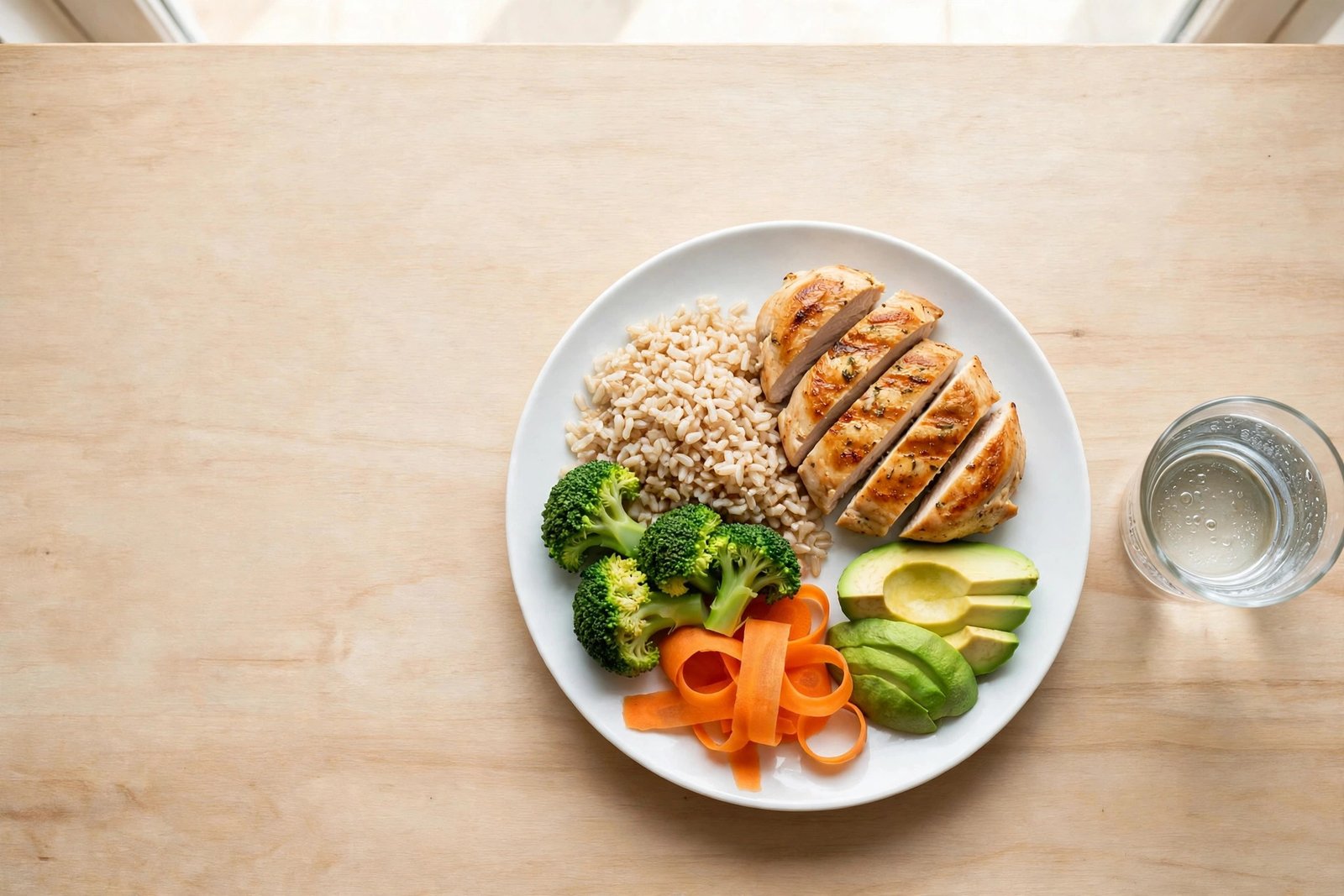
For weight loss
A common starting point is to eat about 300 to 500 calories less than your TDEE each day. That is a moderate deficit for most adults, large enough for gradual change but small enough to sustain. Larger deficits are harder to maintain and more likely to leave you tired.
Track your weight and intake for at least two to three weeks before judging the result. Daily weight fluctuates, so look at the weekly average. If it is not moving after three weeks, reduce your intake by another 100 to 200 calories and test again.
For maintenance
To stay at your current weight, aim to eat close to your TDEE. You do not need to hit the number exactly every day. What matters is the trend over several weeks. If your average weight is slowly rising, your intake is probably a little above your real TDEE. If it is slowly falling, it is probably a little below it.
For weight gain
To gain weight, aim to eat about 300 to 500 calories more than your TDEE. Combining it with regular strength training gives your body a reason to use the extra energy to build muscle. As your weight rises, your TDEE will also rise. Our calories calculator can help you turn your TDEE into a practical daily target.
Common Mistakes to Avoid
Picking too high an activity level. This is the most common error, and it inflates your TDEE. Be honest about a typical week, not an ideal one. When in doubt, start lower.
Treating the result as exact. Your real TDEE may be 100 to 300 calories higher or lower than the estimate.
Changing the target every few days. A target needs two to four weeks of fairly consistent eating before you can judge it.
Forgetting drinks, snacks and cooking oils. A sugary drink, a handful of nuts or a spoonful of oil can each add 100 calories or more.
Counting exercise calories twice. If you use an activity multiplier, your exercise is already included in your TDEE.
Eating at your BMR instead of your TDEE. Eating at that level while living a normal active life creates a large deficit that most people find hard to sustain.
Ignoring sleep and stress. Poor sleep and high stress can affect appetite and food choices, which makes any target harder to stick to.
Worked Example: Putting It All Together
Take Sarah, a 35 year old woman who weighs 70 kilograms, is 165 centimetres tall, and exercises moderately three to four times a week.
Step 1: Calculate BMR. For women, the formula is 10 times weight, plus 6.25 times height, minus 5 times age, minus 161. That gives 700, plus 1,031.25, minus 175, minus 161, which is about 1,395 calories.
Step 2: Apply the activity multiplier. Sarah is moderately active, so she uses 1.55. Her estimated TDEE is 1,395 times 1.55, which is about 2,162 calories per day.
Step 3: Choose a target. To maintain her weight, she would aim for around 2,150 to 2,200 calories a day. To lose weight, she might start at around 1,650 to 1,850 calories a day. To gain weight, she might start at around 2,450 to 2,650 calories a day.
Step 4: Test and adjust. Sarah would follow her target for two to three weeks and track her weight trend. If her average weight barely moved, she could reduce her intake by 100 to 200 calories. If she lost weight much faster than expected and felt tired, she could raise it slightly.
Try the same steps with your own numbers using our BMR calculator and TDEE calculator.
Frequently Asked Questions
What is the difference between BMR and TDEE?
BMR is the calories your body would burn at complete rest. TDEE is the calories you burn in a full day, including BMR plus movement, exercise and digestion. TDEE is always higher, and it is the number to use for a daily calorie target.
Is BMR or TDEE more important for weight loss?
TDEE is more useful for weight loss, because it reflects your real daily burn. Aim for a moderate deficit below your TDEE instead.
How accurate are BMR and TDEE calculators?
They give a reasonable estimate for most people, but they are not exact. Your real numbers can differ by 100 to 300 calories or more. Test the result for two to four weeks, then adjust it.
Should I recalculate my BMR and TDEE after losing weight?
Yes. As your weight falls, your BMR and TDEE also fall, because a smaller body needs less energy. Recalculate every 5 kilograms or so of weight change, or when your activity level changes significantly.
Can I eat below my BMR?
It is generally not a good idea to eat below your BMR for long periods without professional guidance. A very low intake can leave you tired, hungry and low on nutrients. Talk to a doctor or a registered dietitian first.
Medical Disclaimer
This article is general information only. It is not medical advice, and it is not a substitute for advice from a qualified health professional. Talk to your doctor, or a registered dietitian, before changing your diet or exercise routine, especially if you have a medical condition, are taking medication, are pregnant or breastfeeding, or have a history of disordered eating.