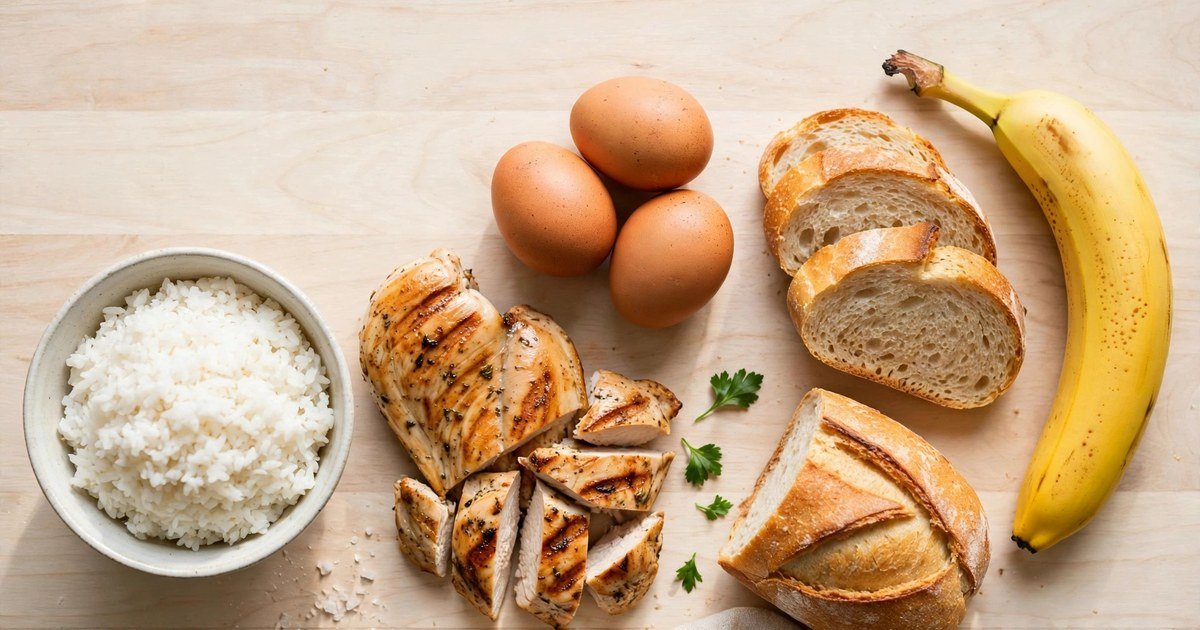
In short: most everyday foods sit in a clear range, and cooking method, toppings and portion size change the number more than the food itself.
- A palm sized piece of grilled chicken is about 240 to 280 calories. A cup of cooked rice is about 200 to 220, one egg about 70 to 80, and a slice of bread about 70 to 90.
- A large bubble tea at 400 to 500 calories has more energy than grilled chicken with a cup of rice, and it will not keep you full nearly as long.
- One tablespoon of cooking oil adds about 120 calories, so pouring freely can add 240 to 360 calories to a meal.
- A full day built from these foods adds up to about 2,000 calories: breakfast 400, lunch 550, snack 200, dinner 650, and a small milk tea 150.
Be honest. When did you last look at your plate and actually know how many calories were on it? Most of us eat the same foods every week, chicken, rice, eggs, bread, and we sort of know which ones feel light and which feel heavy. But ask us for a number and we’d have to guess. And our guesses are usually way off.
That matters, whether you’re trying to lose a bit of weight, put some on, or just eat with more awareness. You don’t need to count every calorie forever. But knowing the rough numbers for the foods you eat all the time changes everything. Every number here is approximate. Brands differ, recipes differ, and your portion probably isn’t the same as mine.
The Short Answer
Most everyday foods fall into a clear pattern. A palm sized piece of grilled chicken is about 250 calories. A cup of cooked rice or pasta is about 200. One egg is about 75. A slice of bread is about 80. A medium banana is about 100. The foods that surprise people are rarely the plain ones. They are the fried versions, the creamy sauces, the sugary drinks, and the portions that are two or three times bigger than they look. Remember this: cooking method, toppings, and portion size change the number more than the food itself does.
Why the Same Food Can Be 200 Calories or 500
The food itself is only half the story. How you cook it, what you put on it, and how much lands on your plate matter just as much. Grilled and fried chicken start out as the same meat, but batter and hot oil add a whole lot of energy. Boiled potatoes are modest. Roast them in oil and they’re a different food.
Then there are sauces, where most of us get caught out. A plain sandwich is one thing. The same sandwich with a thick smear of mayonnaise is easily 100 calories more. Dressing, ketchup, sweet chilli sauce, cheese sauce, they all count, especially when you pour instead of measure. A spoonful looks like nothing, but a spoonful of oil or mayo is around 90 to 100 calories.
And the big one, portion size. A small bowl of rice and a big mound of rice are both just rice, but they can be 200 calories apart. A takeaway box of fried rice can hold two or three home servings in one container. So treat every calorie number as a typical value, not gospel. That’s why this guide uses ranges.
Your Hand Is a Better Measuring Tool Than You Think
You don’t need a kitchen scale to eat sensibly. Who wants to weigh dinner every night? Your hand does a surprisingly good job, and it goes everywhere with you.
- Palm: one serving of meat or fish, roughly 100 to 150 grams cooked, or 150 to 250 calories.
- Fist: one serving of cooked rice, pasta or potatoes, roughly one cup.
- Cupped hand: one serving of cereal or oats, or a serving of vegetables with two cupped hands.
- Thumb, tip to first joint: about one tablespoon of butter, oil or peanut butter, around 90 to 100 calories.
These aren’t rules, they’re guides. Bigger people have bigger hands, and bigger bodies need more energy, so it roughly evens out.
Calories in Everyday Foods
Here is the whole guide in one table. All values are approximate, for the food as you would normally eat it.
| Food | Typical serving | Approx. calories |
|---|---|---|
| Chicken breast, grilled, skinless | 150 g, palm sized | 240 to 280 |
| Chicken breast, with skin | 150 g, palm sized | 290 to 360 |
| Fried chicken drumstick | 1 piece | 180 to 220 |
| Fried chicken burger patty | 1 patty | 350 to 450 |
| Rice, white, cooked | 1 cup, fist sized | 200 to 220 |
| Rice, brown, cooked | 1 cup, fist sized | 210 to 230 |
| Fried rice | 1 cup | 300 to 400 |
| Egg, boiled | 1 large | 70 to 80 |
| Bread, white or wholemeal | 1 slice | 70 to 90 |
| Oats, dry | 40 g, half a cup | 150 |
| Banana | 1 medium | 90 to 110 |
| Cheddar cheese | 30 g, matchbox sized | 120 |
| Potato, boiled | 1 medium, 150 g | 110 to 130 |
| Pasta, cooked | 1 cup, fist sized | 200 to 220 |
| Mixed nuts | 30 g, small handful | 170 to 190 |
| Peanut butter | 1 tablespoon | 90 to 100 |
| Milk tea, with sugar | 1 regular cup | 200 to 300 |
| Bubble tea, large, full sugar | 1 large cup | 400 to 500 |
Three things jump out. First, the plain staples are all in the same range, roughly 70 to 220 calories a serving, which makes them easy to swap. Second, frying changes everything: grilled chicken is 240 to 280, a fried patty is 350 to 450. Third, drinks can match a meal. A large bubble tea at 400 to 500 calories has more energy than grilled chicken with a cup of rice, and it won’t keep you full nearly as long.
The Sneaky Stuff That Adds Hundreds of Calories
Most people don’t overeat because of one big meal. They overeat because of small things they never count.
Drinks. A can of cola is about 140 calories, a large sweetened coffee can be 200 to 300, a glass of fruit juice about 110. None of them fill you up the way food does. Water and unsweetened tea cost you almost nothing.
Cooking oil. One tablespoon of oil is about 120 calories. Pour freely and you can easily add two or three tablespoons, or 240 to 360 calories, to a meal. Measuring it, or using a spray, keeps this in check. Same goes for butter and ghee.
The extras. A salad sounds light until you add cheese, croutons, nuts and creamy dressing, and suddenly it’s 600 calories. A baked potato is modest until it’s with butter, cheese and sour cream.
Label serving sizes. A packet might call 30 grams a serving, but most of us eat two or three times that in one sitting. Check how many servings are in the pack.
Restaurant portions. Eating out portions are usually much bigger than home ones, and the food is often cooked with more oil, butter and sugar. Assume the portion is bigger than it looks.
Little tastes and snacks. A biscuit with your tea, a few crisps while you’re cooking, a spoonful of peanut butter from the jar. Each one is tiny, but three or four across a day can quietly add 300 to 500 calories.
How to Use a Calories Calculator
Knowing the calories in single foods is useful, but you need a daily target to compare them against. That’s where a calories calculator comes in. You put in your age, sex, height, weight and how active you are, and it gives you an estimated daily target for losing weight, staying the same, or gaining weight.
Start with your maintenance level, the amount that keeps your weight steady. Our calories calculator will give you that number, and our TDEE calculator explains the total daily burn behind it. Want to lose weight? A good starting point is 300 to 500 calories below maintenance. Want to gain? Aim for 300 to 500 above it.
Once you’ve got your target, build your day around it using the table above. For a fuller guide to working out your own number, read How Many Calories Do I Need a Day. Within 100 calories either way is close enough. Watch your weight trend over two to three weeks. If it’s not moving the way you want, shift the target by 100 to 200 calories and try again.
A macro calculator can take you a step further, splitting your calories between protein, carbs and fat, and our BMR calculator estimates what your body burns at complete rest.
A Full Day That Adds Up to 2,000 Calories
Here’s a simple day built from the foods above, adding up to around 2,000 calories, a common maintenance target for many adults. Yours might be higher or lower, but the method is exactly the same.
Breakfast, about 400 calories. Porridge made with 40 grams of oats and water, topped with a sliced banana, plus a cup of tea with a little milk. That’s roughly 150 calories of oats, 100 of banana, and about 50 of milk and tea combined.
Lunch, about 550 calories. Two slices of wholemeal bread, about 150 calories, with a grilled chicken breast, about 250, and salad. A thin spread of mayo adds about 50, and a piece of fruit adds about 80.
Afternoon snack, about 200 calories. A small handful of mixed nuts, about 180 calories, and a glass of water. Simple.
Dinner, about 650 calories. One cup of cooked rice, about 210 calories, with a palm sized piece of grilled chicken, about 250, and vegetables cooked with a teaspoon of oil, about 100. A small piece of cheese afterwards adds about 60.
Evening drink, about 150 calories. A small cup of milk tea with half sugar, about 150 calories, instead of a large full sugar bubble tea, which could be 400 or more.
Add it up and you’re at roughly 1,950 to 2,050 calories. Now look at how easily it changes. Swap the grilled chicken for fried chicken and you’ve added 200 to 300 calories. Swap the small milk tea for a large bubble tea and that’s another 250. None of those swaps are forbidden. They just show you where the calories go, so you can decide which ones are worth it to you.
Frequently Asked Questions
How many calories are in a chicken breast?
About 240 to 280 calories for a grilled or baked skinless breast, roughly 150 grams cooked. Keep the skin on and add about 50 to 80, and a breaded fast food fillet can reach 350 to 450.
How many calories are in a cup of cooked rice?
About 200 to 220 calories for white rice, and about 210 to 230 for brown rice. Fried rice is higher, often 300 to 400 per cup. A takeaway container can hold two to three cups, so check the portion.
How many calories are in milk tea or bubble tea?
A regular cup of milk tea with sugar has roughly 200 to 300 calories. A large bubble tea with full sugar, milk and pearls can reach 400 to 500. Half sugar or a smaller size can save 100 to 200 calories. Plain tea with a splash of milk is only about 20 to 30.
Why do calorie counts for the same food differ so much?
Because of portion size, cooking method, brand, and added ingredients like oil, butter, sugar and sauces. A large portion can easily double the calories of a small one. That’s why ranges are more honest than single numbers.
Do I need to count calories every day?
No, and most people don’t need to. Learn the rough calories of the foods you eat most often, use portion guides and a daily target as a general check, and you’re most of the way there. Counting for a week or two can teach you a lot. If your weight stops moving the way you want, count again for a short while.
Sources
- US Department of Agriculture, Agricultural Research Service. FoodData Central. The calorie values for chicken, rice, eggs, bread, banana, cheese, oats and other foods in this post come from USDA food composition data. https://fdc.nal.usda.gov/
- US Department of Agriculture and US Department of Health and Human Services. Dietary Guidelines for Americans, 2020-2025. Estimated calorie needs for adults run from about 1,800 calories a day for sedentary women to about 3,000 for active men. https://fns-prod.azureedge.us/sites/default/files/EstimatedCalorieNeedsPerDay.pdf
Medical Disclaimer
This article is general information only. It is not medical advice, and it is not a substitute for advice from a qualified health professional. Talk to your doctor, or a registered dietitian, before changing your diet, especially if you have a medical condition, are taking medication, are pregnant or breastfeeding, or have a history of disordered eating.