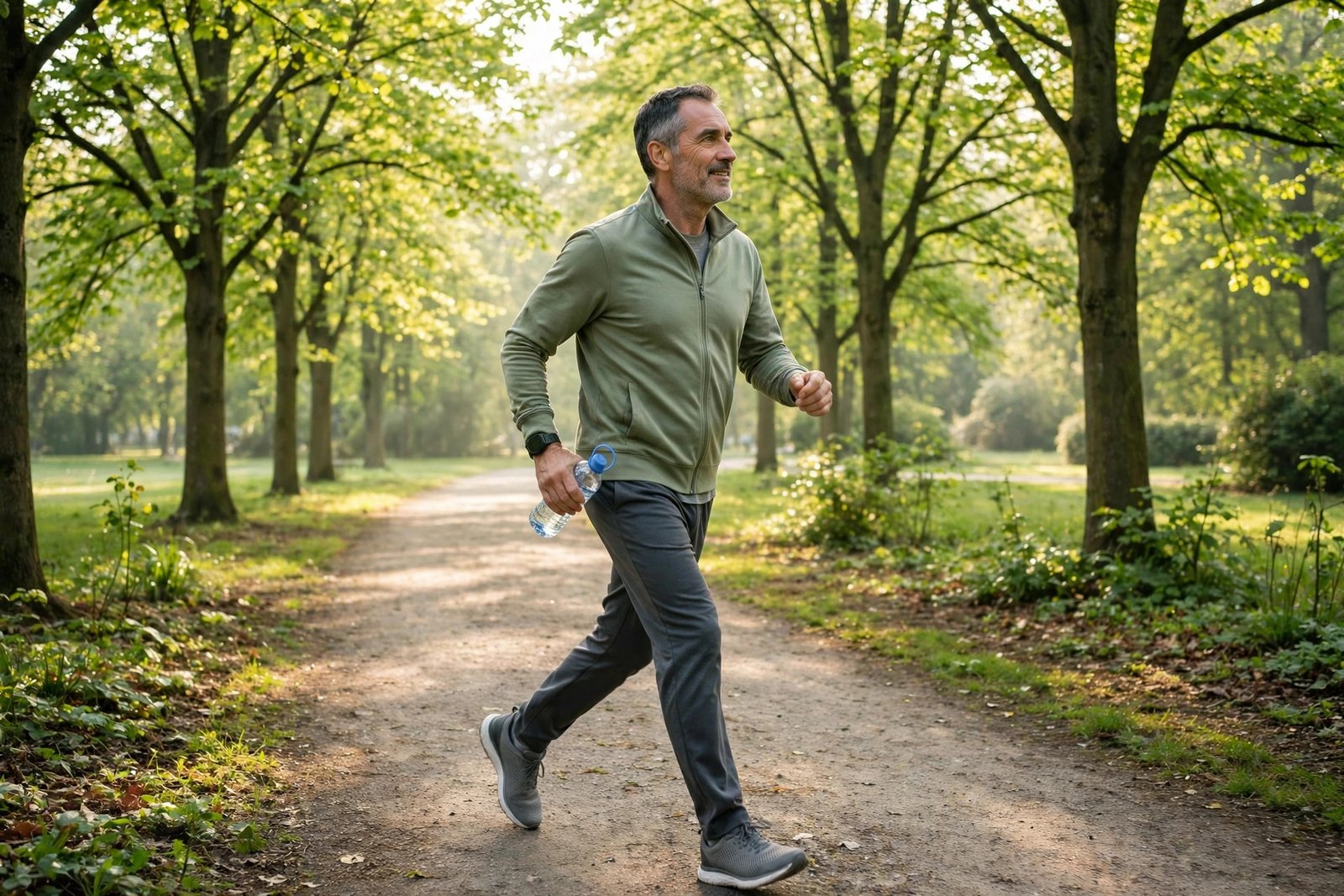
How to lose weight with type 2 diabetes safely: eat about 500 kcal a day below maintenance, build meals on the diabetes plate, move 150 minutes a week, and aim for 5 to 10 percent of your starting weight. The trials below show the payoff is real, and remission follows weight loss itself, not any single food.
- DiRECT 2018: 46 percent in remission at 12 months against 4 percent on usual care, with a mean loss of 10 kg.
- Look AHEAD: 5,145 people; intensive lifestyle lost 8.6 percent at one year and HbA1c fell from 7.3 percent to 6.6 percent.
- Diabetes Prevention Program: lifestyle cut new diabetes by 58 percent over 2.8 years, and every kilogram lost cut risk by 16 percent.
- ADA target: at least 5 percent of body weight, with 7 to 10 percent a better goal, plus 150 minutes of activity a week.
- Safety first: insulin and sulfonylureas raise the risk of low blood sugar when you eat less, so plan any change with your doctor first.
The Short Answer
Yes, and it helps more than most people expect. Type 2 diabetes is driven in large part by extra fat, especially fat in and around the liver, which makes the body less responsive to its own insulin. Lose weight and that fat drains away, insulin works better, and blood sugar falls. That is why the American Diabetes Association treats weight loss as a core part of diabetes care.
About 537 million adults were living with diabetes in 2021, and type 2 accounts for about 90 percent of cases. Losing 5 percent of starting weight improves insulin sensitivity and blood sugar, and larger losses bring larger gains. The usual blood sugar target for most nonpregnant adults is an HbA1c below 7 percent.
Why Losing Weight Helps Your Blood Sugar
Insulin moves glucose from blood into cells. In type 2 diabetes the cells respond weakly to it, a state called insulin resistance, and the pancreas works harder to keep up until it cannot, and blood sugar rises. Extra weight, especially around the waist and in the liver, is one of the main drivers.
When you lose weight, fat in the liver is among the first to go. The liver releases less glucose overnight, fasting blood sugar falls, and the pancreas gets some rest. Blood sugar improves in step with weight loss, and the people who lose the most see the biggest falls in HbA1c. Insulin resistance also sits behind other conditions, including PCOS, where weight loss helps in a similar way, as our post on how to lose weight with PCOS explains.
Weight loss also helps blood pressure, triglycerides and HDL cholesterol, and many people in the big lifestyle trial cut back on medicines.
The DiRECT Trial: Remission Is Possible
The strongest evidence comes from DiRECT, the Diabetes Remission Clinical Trial, run in 49 GP practices in Scotland and north east England and published in The Lancet in 2018. It enrolled 306 adults aged 20 to 65, diagnosed within the previous 6 years, with a BMI of 27 to 45, and not on insulin.
The programme was intensive and doctor supervised: medicines were stopped at the start, then a total diet replacement of 825 to 853 kcal a day for 3 to 5 months, then stepped food reintroduction over 2 to 8 weeks, then support to keep the weight off. This is not a diet to copy on your own.
At 12 months, 46 percent of the programme group were in remission, against 4 percent on usual care. Remission meant an HbA1c below 6.5 percent after at least 2 months off all diabetes medicines. A quarter had lost 15 kg or more, against nobody in the control group, and the average loss was 10.0 kg against 1.0 kg.
The link was almost a straight line: nobody who gained weight went into remission, 7 percent of those who lost 0 to 5 kg, 34 percent at 5 to 10 kg, 57 percent at 10 to 15 kg, and 86 percent at 15 kg or more. Every kilogram mattered.
The effect faded as weight came back: 36 percent were still in remission at 2 years, and at 5 years, among 85 people on low intensity support, the average loss was 6.1 kg and 13 percent were in remission.
Look AHEAD: The Big American Trial
Look AHEAD was the largest lifestyle trial in type 2 diabetes: 5,145 overweight or obese adults at 16 centres in the United States, randomised to an intensive lifestyle programme or to diabetes support and education, aiming for at least 7 percent weight loss.
At one year the lifestyle group had lost 8.6 percent of starting weight, against 0.7 percent, and fitness rose 20.9 percent against 5.8 percent. Mean HbA1c fell from 7.3 percent to 6.6 percent, against 7.3 to 7.2 percent, and more people reduced their diabetes, blood pressure and cholesterol medicines.
One honest disappointment: the trial was designed to cut heart attacks and strokes, and it did not. Over a median 9.6 years the primary outcome happened in 403 people in the lifestyle group and 418 in the education group, a hazard ratio of 0.95.
How Much Weight to Aim For
The ADA sets at least 5 percent of starting weight as the first goal. Prevention programmes use 5 to 7 percent, and losses of 10 to 15 percent bring larger improvements. DiRECT shows why: remission rose from 7 percent at 0 to 5 kg lost to 86 percent at 15 kg or more.
Start with 5 percent, reach it, then decide with your clinician whether to aim further. A deficit of 500 to 750 kcal a day gives about half a kilogram to a kilogram a week. Faster losses belong under medical supervision, as in DiRECT.
The Worked Example
Meet David, 55, 178 cm, 96 kg, lightly active: basal metabolic rate 1,916 kcal a day, maintenance 2,635 kcal a day, so a 500 kcal deficit gives a target of 2,135 kcal a day. His BMI is 30.3, protein 115 to 154 g a day. Check your own numbers with our BMI calculator, TDEE calculator and weight loss goal calculator.
A 500 kcal daily deficit is 3,500 kcal a week, about 0.45 kg a week at 7,700 kcal per kilogram of body fat, or about 5.45 kg in 12 weeks. David’s 5 percent target is 4.8 kg, to 91.2 kg, reached in about 11 weeks. In DiRECT terms, a 10 kg loss put him in the band where 57 percent were in remission, and 15 kg in the band where 86 percent were.
Eating for Steadier Blood Sugar
With type 2 diabetes, what you eat matters twice: it sets your calorie intake, and it sets how fast blood sugar rises after a meal. The ADA names no single best diet. Mediterranean, low carbohydrate and other patterns are all accepted, and the pattern you can keep is the one that works.
The simplest structure is the ADA diabetes plate: a 9 inch plate, half nonstarchy vegetables, one quarter lean protein, one quarter quality carbohydrate foods, and water or a zero calorie drink on the side. Half a plate of vegetables crowds out the foods that spike blood sugar without any counting.
Fibre is the quiet helper. The ADA recommends at least 14 g of fibre per 1,000 kcal, or 28 g on a 2,000 kcal day, from vegetables, beans, lentils, whole grains and fruit. Fibre slows digestion and the blood sugar rise after a meal. Low glycemic index foods, such as oats and lentils instead of white bread, work the same way.
Low carbohydrate eating is a real option: the ADA Standards note it reduces HbA1c and the need for diabetes medicines. But cutting carbs is when low blood sugar becomes a risk on insulin or sulfonylureas, so make this change with your diabetes team.
Three easy wins: cut sugary drinks, since a 330 mL soft drink carries about 140 kcal; put protein at every meal, 1.2 to 1.6 g per kg a day; and eat regular meals at regular times, which helps avoid lows on medicines that can cause them.
Moving More: 150 Minutes Plus Strength
The ADA recommends at least 150 minutes a week of moderate activity, such as brisk walking, spread over at least 3 days, with no more than 2 consecutive days without activity. Add resistance training 2 to 3 times a week: muscle is where glucose goes after a meal. Break up long sitting every 30 minutes.
Activity burns glucose while you move and makes muscles more sensitive to insulin for hours afterwards. A 10 minute walk after meals is an easy start. Begin with 10 minutes a day and add 10 a week. If you have foot, eye or heart problems, ask your clinician which activities suit you first.
Sleep and Stress
Short sleep is linked to weight gain and worse blood sugar control: hunger hormones rise, you crave quick energy foods, and insulin works less well the next day. Most adults need 7 or more hours a night, and a regular bedtime helps. Stress hormones raise blood sugar directly, and stress eating usually means sweet or salty food, so a walk instead of a snack when stress hits protects both weight and blood sugar.
Medicines and Weight
Some diabetes medicines affect weight. GLP-1 receptor agonists and SGLT2 inhibitors are linked to weight loss. Insulin, sulfonylureas and thiazolidinediones can promote weight gain. Metformin and DPP-4 inhibitors are roughly weight neutral. This is background information, not a recommendation: never start, stop or change a medicine because of its effect on weight, and never stop one on your own to lose weight faster. Blood sugar can rebound sharply, and stopping insulin suddenly is dangerous.
Safety First: Low Blood Sugar
If you take insulin or a sulfonylurea, eating less or cutting carbohydrates can drop your blood sugar too low, called hypoglycaemia. Warning signs are shakiness, sweating, a fast heartbeat, hunger, irritability and confusion, and a severe low can cause a fall or loss of consciousness.
These medicines keep pushing blood sugar down whether you have eaten or not, so doses usually need to be reduced when calories are cut, planned with your clinician before the diet starts, with blood sugar checked more often in the first weeks.
Talk to your doctor or diabetes team first, agree the plan and what to do if blood sugar runs low, and only then change how you eat. Never stop a diabetes medicine without your clinician, even if readings look good.
A 12 Week Starter Plan
Weeks 1 and 2: book the conversation with your doctor or diabetes team and agree the plan, including medicines. Start the diabetes plate at lunch and dinner, walk 10 minutes after meals, and write down what you eat for a week.
Weeks 3 and 4: set your calorie target, about 500 kcal below maintenance, and build meals around protein, fibre and vegetables. Build walking toward 150 minutes a week. Weigh yourself once a week, same day and time.
Weeks 5 to 8: add resistance training twice a week. Check blood sugar readings with your team and adjust if lows appear. Expect about 0.45 kg a week at a 500 kcal deficit, roughly 2 kg a month.
Weeks 9 to 12: review progress against your 5 percent target. David would be near his 4.8 kg target by now. Decide with your clinician whether to hold steady or aim for 10 percent, then plan maintenance, because DiRECT shows keeping weight off keeps the benefit.
Frequently Asked Questions
How much weight do you need to lose with type 2 diabetes?
At least 5 percent of starting weight, the first goal the ADA sets. Larger losses help more: in DiRECT, remission was 7 percent at 0 to 5 kg lost, 34 percent at 5 to 10 kg, 57 percent at 10 to 15 kg, and 86 percent at 15 kg or more.
Can losing weight reverse type 2 diabetes?
It can put it into remission, which is not the same as a cure. In DiRECT, 46 percent were in remission at 12 months, against 4 percent on usual care, meaning an HbA1c below 6.5 percent for at least 3 months after stopping diabetes medicines.
Is it safe to cut calories if you take insulin or a sulfonylurea?
Only with your doctor or diabetes team involved. Eating less can cause low blood sugar when these medicines keep working at the same dose, so doses usually need reducing before the diet starts. Check blood sugar more often in the first weeks, and never stop a medicine without your clinician.
What is the best diet for losing weight with type 2 diabetes?
There is no single best diet. The ADA accepts Mediterranean, low carbohydrate and other patterns, and the calorie deficit matters more than the label. The diabetes plate works with any of them: half nonstarchy vegetables, a quarter lean protein, a quarter quality carbohydrates.
How fast should you lose weight with type 2 diabetes?
About half a kilogram to a kilogram a week, which is what a 500 to 750 kcal daily deficit gives. At 500 kcal a day below maintenance, David loses about 0.45 kg a week and reaches his 5 percent target in about 11 weeks.
Sources
- Lean et al. 2018, PubMed: DiRECT 12 month results; 46 percent remission, mean loss 10 kg.
- Lean et al. 2024, PubMed: DiRECT 5 year extension; 13 percent in remission, mean loss 6.1 kg.
- Look AHEAD Research Group 2007, PMC: 5,145 people; 8.6 percent loss at 1 year, HbA1c 7.3 to 6.6 percent.
- Look AHEAD Research Group 2013, N Engl J Med 2013;369:145-154: no reduction in cardiovascular events, hazard ratio 0.95.
- Diabetes Prevention Program Research Group 2002, PMC: 58 percent lower diabetes incidence, 7 percent weight loss goal.
- ADA Standards of Care 2026, prevention section: 5 to 7 percent weight loss and 150 minutes a week.
- American Diabetes Association, Diabetes Plate: half vegetables, quarter protein, quarter carbohydrates.
- Frontiers in Nutrition 2021, adapting medicines to a low carbohydrate diet: insulin and sulfonylurea hypoglycaemia risk.
- International Diabetes Federation, IDF Diabetes Atlas 10th edition (2021): 537 million adults with diabetes, about 90 percent type 2.
- Weight Insider: BMI Calculator, TDEE Calculator, Weight Loss Goal Calculator, How to Lose Weight With PCOS, Glycemic Index Calculator.
Medical Disclaimer
This article is for general information only, not medical advice. Losing weight with type 2 diabetes can change your blood sugar and your need for medicines, especially if you take insulin or a sulfonylurea, which can cause low blood sugar when you eat less. Plan any calorie or carbohydrate change with your own doctor or diabetes team first, check your blood sugar as they advise, and never start, stop or change any medicine without talking to your clinician first.
Last updated: 28 November 2026