
Introduction
If you have tried to gain weight and felt like nothing works, you are not alone. Many women feel full quickly, forget meals when life gets busy, or eat a big lunch and then cannot face dinner. It can be frustrating, especially when people tell you to just eat more cake or drink milkshakes all day.
Healthy weight gain is not about junk food, or forcing yourself to feel uncomfortable at every meal. It is about eating a little more than your body uses, choosing nutrient rich foods, getting enough protein, and adding strength training so more of what you gain is muscle.
Please talk to a doctor first if you have lost weight without trying, if you have a very low appetite, or if you have a health condition that affects your weight. This article is general information only, not personal medical advice.
Why Gaining Weight Can Be Hard
Appetite varies a lot. Some people can eat large meals easily. Others feel full after a small plate and need time before they want food again. If you are in the second group, smaller, more frequent meals and snacks can work better.
Many women also have a busy schedule or a job that keeps them on their feet all day. If you move a lot, you burn more energy, so you need more food just to stay at the same weight. Stress, poor sleep, and skipped meals make it easy to eat less than you need without realising it.
Some health issues can affect appetite and weight, including thyroid problems, digestive issues, anxiety, depression, and side effects from medication. If eating more has not helped, or if you feel unwell or tired, speak to a doctor. A healthy weight differs for every woman.
How Much Weight Gain Is Healthy
A slow and steady pace is usually best. For most women, gaining about 0.25 to 0.5 kilograms per week is a sensible target. Some weeks you may gain a little more, and some weeks you may stay the same. That is normal. Weight changes from day to day because of water, food in your stomach, and your menstrual cycle, so a weekly average matters more than any single weigh in.
Gaining very quickly often means more of the gain is body fat, and it can leave you feeling bloated. A slower pace gives your body time to build muscle, especially with strength training.
If you are underweight, your doctor may suggest a different target. If you are already in a healthy range but want to build muscle, focus more on strength and energy than the scale. Think in terms of eight to twelve weeks, not two.
Calories and Surplus in Plain Terms
Calories are a measure of energy from food. If you eat about the same amount as you use, your weight stays roughly the same. If you eat less, you lose weight. If you eat more, you gain weight. The extra amount above what you use is called a calorie surplus.
For healthy weight gain, you do not need a huge surplus. A small surplus of about 300 to 500 calories per day above maintenance, the amount that keeps your weight steady, is a good place to start.
The basal metabolic rate (BMR) calculator estimates the energy your body uses at rest, and the calories calculator can estimate daily needs based on activity. These are estimates, so adjust after two to three weeks. Adding 300 to 500 calories can be as simple as a snack, a spoonful of nut butter at breakfast, more olive oil in cooking, or a glass of milk with a meal. If you are not gaining after two to three weeks, add another 200 to 300 calories per day.
Protein Needs for Healthy Weight Gain
Protein helps your body build and repair muscle, and it supports recovery after strength training. Without enough protein, more of your gain is likely to be body fat.
A common general guide for active women building muscle is about 1.4 to 2.0 grams of protein per kilogram of body weight per day. For example, a woman who weighs 55 kilograms might aim for about 77 to 110 grams per day. These are general ranges, not medical advice. Your needs may differ if you have a kidney condition or another health issue, so check with your doctor if you are unsure.
Include protein at every meal and snack, rather than trying to get it all in one meal. Good sources include eggs, chicken, fish, Greek yoghurt, milk, lentils, beans, tofu, nuts, and nut butters. You do not need meat at every meal. Try the protein intake calculator for a personal estimate, and the macro calculator to see how protein, carbohydrates, and fats fit together. A protein shake can help, but it should add to meals, not replace them.
Best Foods for Healthy Weight Gain
The best foods for weight gain are rich in nutrients and reasonably high in energy, so you can eat more calories without eating huge volumes. They differ from junk food, which is high in calories but low in nutrients.
Healthy fats are a good place to start, because fat has more than twice the calories per gram as protein or carbohydrate. Good choices include olive oil, avocado, nuts, nut butters, and oily fish such as salmon. Add olive oil to salads, or spread peanut butter on toast.
Starchy carbohydrates give you energy and are easy to eat in larger portions. Good options include oats, rice, pasta, bread, and potatoes. Dairy foods can help too, if you tolerate them. Full fat milk, Greek yoghurt, and cheese add calories, protein, and calcium.
Dried fruit, such as raisins and dates, is small in volume but high in energy. Fruit and vegetables are lower in calories, but they provide vitamins, minerals, and fibre. Limit sugary drinks, sweets, and fried fast food. An occasional treat is fine, but they should not be the main way you gain weight.
Sample Day of Eating
This is an example only, not a prescription. Swap foods to suit your tastes, budget, and any allergies or dietary needs.
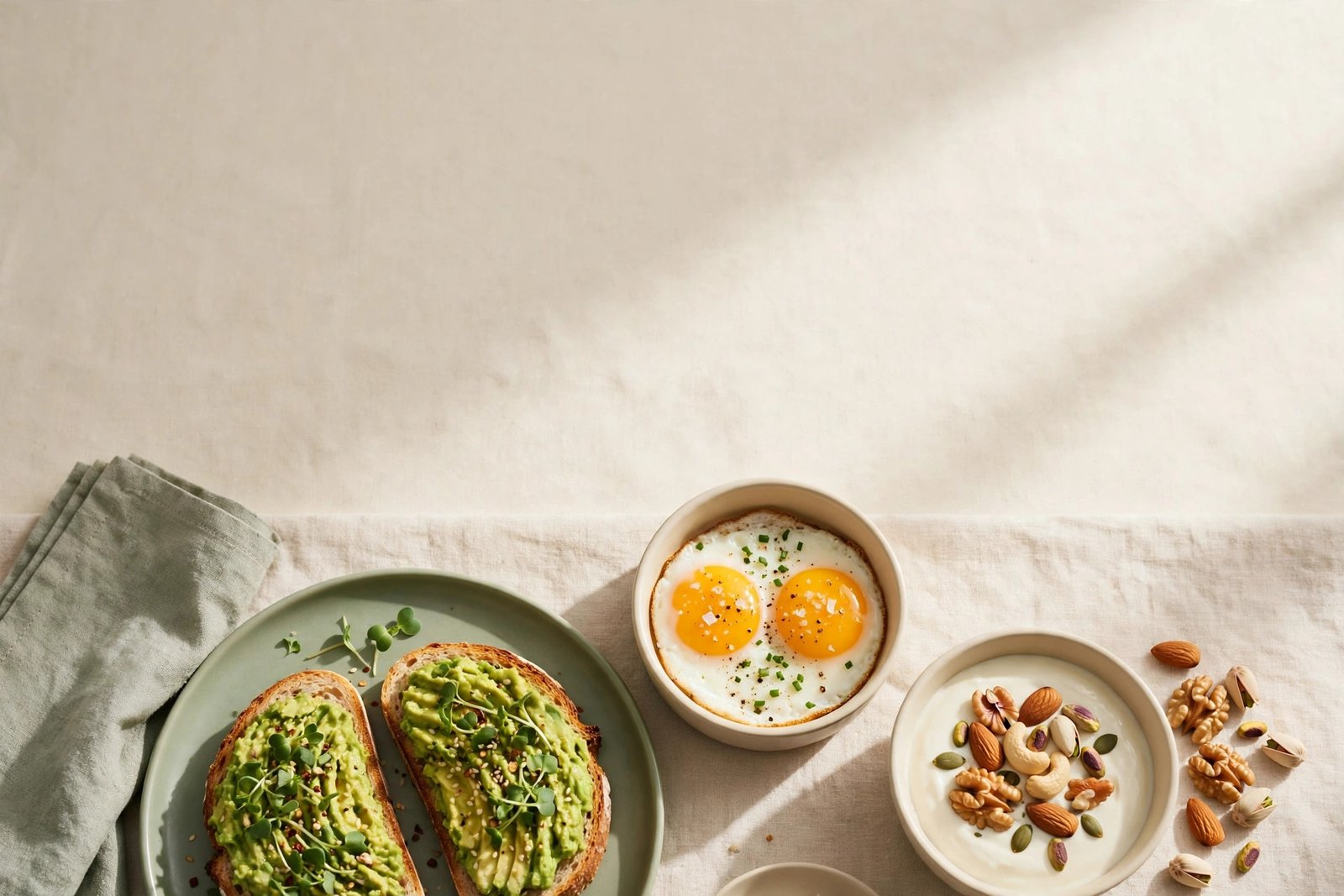
Breakfast: porridge made with milk and oats, topped with banana, peanut butter, and seeds, plus a boiled egg. Or wholegrain toast with avocado and egg, plus a glass of milk.
Mid morning snack: Greek yoghurt with berries and almonds, or a small smoothie made with milk, oats, banana, and peanut butter.
Lunch: a chicken and rice bowl with vegetables and olive oil, or lentil stew with bread.
Afternoon snack: cheese and crackers, hummus with bread and carrot sticks, or trail mix with dried fruit and nuts.
Dinner: salmon or tofu with potatoes and vegetables cooked in olive oil, or pasta with a tomato and bean sauce, topped with cheese.
Before bed, a small snack such as warm milk with oats is optional. The key is consistency, not perfection. If you miss a snack one day, just get back to your usual pattern at the next meal. For more ideas, visit the Weight Insider weight gain hub.
Strength Training Basics
Food alone can help you gain weight, but strength training helps you gain the right kind of weight. When you lift weights, you give your muscles a reason to grow. Combined with enough protein and calories, more of your gain can become muscle, and it can improve strength, posture, and bone health.
You do not need hours in the gym, or very heavy weights to start. Two to three sessions per week, lasting 30 to 45 minutes, is a good target. Include squats, lunges, glute bridges, push ups, rows, and shoulder presses. Bodyweight exercises count too, and dumbbells are useful at home.
Start with weights that feel challenging but allow good form. Try 2 to 3 sets of 8 to 12 repetitions. As you get stronger, slowly increase the weight or repetitions. Allow at least one rest day between sessions and aim for 7 to 9 hours of sleep. If you are new to lifting, ask a qualified trainer to show you good form. If you have a health condition or you are pregnant, speak to your doctor first.

Mistakes to Avoid
Relying on junk food is the first mistake. Fast food, sweets, and sugary drinks can add calories quickly, but they are often low in protein, fibre, and nutrients, and they can leave you feeling sluggish. You may gain weight, but it is less likely to be the healthy, strong kind you want.
Eating too little protein is the second. Many women eat plenty of carbohydrates but very little protein, especially at breakfast. Add a protein source to every meal.
Skipping meals is the third. Missed meals make a surplus much harder to reach. Plan simple meals and snacks in advance, and keep portable snacks at home and at work.
Being inconsistent is the fourth. Follow your plan most days, and give it a few weeks before you decide it is not working. Finally, avoid weighing yourself too often, and avoid comparing yourself to other women. Weigh once or twice a week at the same time, and look at the trend over several weeks.
How to Track Progress
Weigh yourself once or twice a week, in the morning, before eating, wearing similar clothes each time. Look at the average over two to three weeks. A slow upward trend is what you are looking for.
Also track how you feel and perform. Are you getting stronger? Do you have more energy? These signs matter, even if the scale moves slowly.
A food diary for a few days can help too. Write down what you eat and drink, and check whether you are getting enough calories and protein. You may spot a pattern, such as a very light breakfast, that is easy to fix. Photos in the same clothes once every two to four weeks can also help.
If your weight has not changed after three to four weeks, review your intake, activity, and sleep. If you are unsure, a registered dietitian can help you adjust your plan. Be kind to yourself. Healthy weight gain is not a race.
Frequently Asked Questions
How can a woman gain weight fast in a healthy way?
There is no safe way to gain a lot of weight very fast. A healthy pace is about 0.25 to 0.5 kilograms per week. Support it with a surplus of 300 to 500 calories a day, protein at every meal, and strength training two to three times a week.
What should women eat to gain weight?
Focus on nutrient rich, energy dense foods such as oats, rice, pasta, potatoes, olive oil, avocado, nuts, eggs, chicken, fish, Greek yoghurt, cheese, and lentils. Use smoothies or milk if you fill up quickly.
How much protein do women need to gain weight?
A general guide for active women building muscle is about 1.4 to 2.0 grams of protein per kilogram of body weight per day, spread across meals. Your exact needs may differ, so use a calculator as a starting point and speak to a doctor or dietitian if you have a health condition.
Is strength training necessary for healthy weight gain?
It is not strictly necessary, but it helps more of your gain become muscle. Strength training two to three times a week, with enough protein and calories, supports muscle growth, strength, and bone health. Walking and light activity are fine alongside it.
When should I see a doctor about weight gain?
See a doctor before you start if you have lost weight without trying, if you have a very low appetite, or if you have symptoms such as ongoing tiredness or digestive problems. Also seek advice if you have a health condition or take medication that affects appetite.
Medical Disclaimer
This article is for general information only and is not medical advice. It does not diagnose or treat any condition. Talk to a doctor or a registered dietitian before changing your diet or exercise routine, especially if weight loss was unintentional, if you have a health condition, or if you take medication that affects your appetite or weight.