In short: the foods that spike blood sugar fastest are sugary drinks, fruit juice, white bread, white rice, pastries and sweets, and you can blunt most spikes by pairing carbs with protein, fibre or fat, and walking after meals.
- High GI foods score 70 or above, medium GI foods score 56 to 69, and low GI foods score 55 or below. White bread, cornflakes, jasmine rice and baked potatoes are high GI; oats, lentils, chickpeas and apples are low GI.
- A gentle 10 to 15 minute walk within an hour after a meal helps your muscles use glucose for energy, which lowers the rise in blood sugar. The best time is within 30 to 60 minutes after you start eating.
- Even 100 percent fruit juice raises blood sugar fast, because juicing removes most of the fibre from fruit. Whole fruit raises it much more slowly.
- Poor sleep and high stress can make blood sugar harder to control. Aim for 7 to 9 hours of sleep where you can.
The foods that spike blood sugar the most are sugary drinks, white bread, white rice, pastries, sweets, breakfast cereals, fruit juice, and large portions of starchy foods eaten on their own. You can stop most glucose spikes by pairing carbs with protein, fibre, or healthy fat, eating smaller portions, and walking for ten minutes after meals.
This guide explains which foods to watch, why they affect you, and the practical swaps you can use today.
What Is a Glucose Spike?
A glucose spike is a fast rise in your blood sugar after you eat, followed by a fall that can leave you tired and hungry again.
Glucose is the sugar your body gets from food, mainly from carbohydrates. Carbohydrates are the starches and sugars in foods like bread, rice, pasta, fruit, and sweets. Your body breaks them down into glucose, which moves into your blood to give you energy.
Your body then releases a hormone called insulin. Insulin helps move glucose from your blood into your cells, where it can be used for energy or stored for later. When glucose rises slowly, insulin can keep up. When it rises very fast, the fall afterwards can feel like a crash.
A rise after eating is normal. A spike is a problem when it is very large, happens often, and leaves you hungry or tired soon after.
What Foods Spike Blood Sugar the Most?
The foods that spike blood sugar the most are high in fast-digesting carbohydrate and low in fibre, protein, and fat. Fibre is the part of plant food your body cannot fully digest. It slows digestion down, which helps glucose enter your blood more slowly. Protein and fat also slow digestion.
Sugary drinks. Fizzy drinks, sweetened iced tea, energy drinks, and sweetened coffee drinks are among the fastest spikers. They are liquid sugar with almost nothing to slow it down.
Fruit juice. Even 100 percent fruit juice raises blood sugar fast. Juicing removes most of the fibre from fruit, so the sugar reaches your blood quickly.
White bread, white rice, and white pasta. These are refined grains. Refined means the fibre-rich outer part of the grain has been removed, so your body digests them quickly.
Breakfast cereals, pastries, and baked goods. Sweetened cereals, croissants, muffins, doughnuts, cakes, and biscuits are made from refined flour and added sugar.
Sweets and chocolate. These are concentrated sugar. A small amount after a meal may be fine, but sweets on an empty stomach often cause a fast spike and a fast crash.
Instant noodles, instant porridge, and mashed potato. Foods that are already soft and broken down are digested faster. Mashed potato raises blood sugar faster than boiled new potatoes.
Large portions of starchy foods. Rice, potatoes, pasta, and bread are not bad foods. A modest serving with vegetables and protein behaves very differently from a huge serving eaten alone.
Why Do Glucose Spikes Make You Hungry?
Glucose spikes make you hungry because the fast fall in blood sugar after a spike can trigger hunger, cravings, and low energy.
You eat something sugary or starchy on its own. Your blood sugar rises fast, your body releases a lot of insulin, and your blood sugar then falls quickly, sometimes lower than before you ate. Your brain reads that fall as a signal to eat again.
That is why a sugary breakfast can leave you hungry by mid-morning, even though you ate plenty of calories. It is not a lack of willpower. It is your body responding to a fast rise and fall.
Repeated spikes can make weight loss harder. They increase cravings, make it harder to feel full, and leave you tired, so you move less. When meals keep you full for three to four hours, you snack less and find your calorie target much easier to follow.
What Is the Glycemic Index?
The glycemic index, often shortened to GI, is a scale that ranks carbohydrate foods by how quickly they raise your blood sugar.
High GI foods, scored 70 or above, raise blood sugar quickly. Examples include white bread, cornflakes, jasmine rice, and baked potatoes. Medium GI foods, scored 56 to 69, raise it at a moderate speed. Examples include basmati rice, whole wheat bread, and sweetcorn. Low GI foods, scored 55 or below, raise it slowly. Examples include oats, lentils, chickpeas, apples, and most vegetables.
GI is useful, but it is not the whole story. Portion size matters too. A small portion of a high GI food may raise your blood sugar less than a huge portion of a low GI food.
You do not need to memorise GI numbers. Choose whole, less processed foods most of the time, keep portions sensible, and pair carbs with protein, fibre, or fat. To check a specific food, try our glycemic index calculator.
High Blood Sugar Foods vs Steadier Choices
This table compares foods that tend to spike blood sugar with steadier swaps. The swaps are not about banning foods you love. They are about building meals that keep you full and steady.
| Foods that often spike blood sugar | Steadier swap | Why it helps |
|---|---|---|
| Fizzy drink or sweetened iced tea | Sparkling water with lemon, or unsweetened tea | Removes liquid sugar, the fastest spiker |
| Fruit juice | Whole fruit with a handful of nuts | Keeps the fibre, adds protein and fat |
| White bread sandwich | Whole wheat bread with chicken, egg, or tuna and salad | Adds fibre and protein, slows the rise |
| Large plate of white rice | Smaller portion of rice with lentils, vegetables, and chicken or fish | Smaller carb portion, more fibre and protein |
| Sugary breakfast cereal | Oats with milk, berries, and peanut butter | Oats digest slowly, protein and fat add fullness |
| Croissant or muffin alone | Whole wheat toast with eggs and avocado | Protein and fat turn a fast snack into a filling meal |
| Instant noodles | Noodles with egg, vegetables, and chicken or tofu | Protein and fibre slow the meal down |
| Large serving of mashed potato | Smaller serving of boiled new potatoes with vegetables and fish | Less broken down starch, smaller portion |
| Sweets on an empty stomach | A small portion of sweets after a meal | Eating sugar with other foods slows the rise |
| Sweetened coffee or milk tea | Unsweetened coffee or tea, or milk tea with less sugar | Cuts the hidden sugar that adds up fast |
Notice a pattern. The steadier choice is rarely a completely different food. It is the same meal with something added, or a smaller portion of the fast carb with more of the foods that slow it down.
What Should I Eat Instead?
You should eat meals that combine carbohydrate with protein, fibre, or healthy fat, and that include vegetables where you can. Protein, in foods like meat, fish, eggs, dairy, beans, and lentils, helps you feel full and slows digestion. Fibre is found in vegetables, fruit, whole grains, and beans. Healthy fats are found in olive oil, nuts, seeds, avocado, and oily fish.
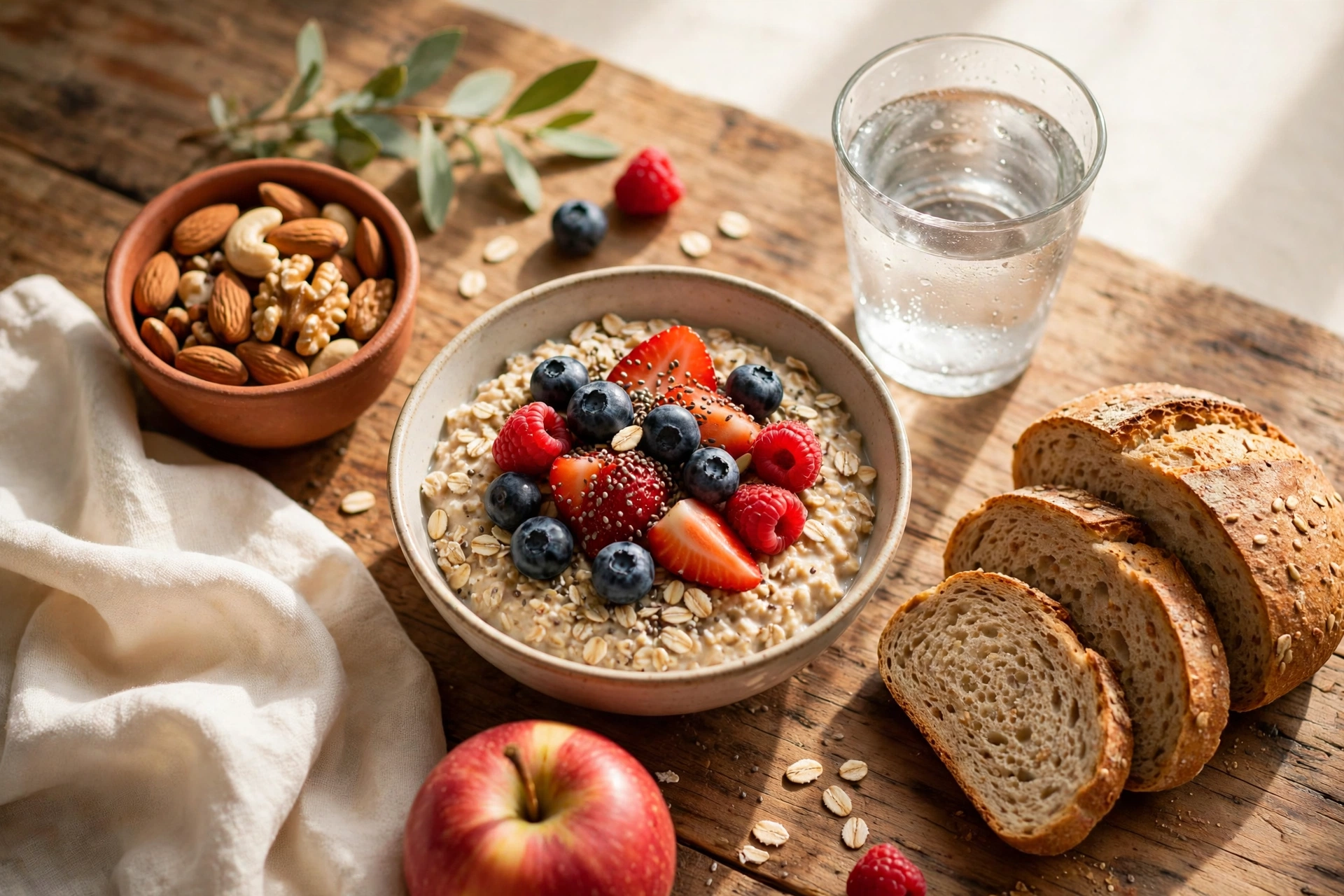
Breakfast: Oats made with milk, topped with berries and peanut butter. Or eggs on whole wheat toast with tomato and spinach. Both give you fibre and protein, which beats a sugary cereal on its own.
Lunch: A grain bowl with brown rice or quinoa, chicken or chickpeas, and plenty of salad or cooked vegetables. Or a whole wheat wrap with tuna, beans, and salad.
Dinner: Grilled fish or chicken, a modest portion of potatoes or rice, and a large serving of vegetables. Or lentil curry with a small portion of rice and a side salad.
Snacks: An apple with peanut butter, Greek yogurt with berries, a small handful of nuts, or hummus with carrot sticks. These are far more filling than biscuits or sweets.
You do not need to eat perfectly. A steady eating pattern you can keep is better than a strict plan you abandon in a week.
Does Walking After Eating Help Blood Sugar?
Yes, walking after eating helps blood sugar. A short walk after a meal is one of the simplest and most effective ways to reduce a glucose spike.
When you walk, your muscles use glucose for energy, so less glucose stays in your blood and the rise after eating is smaller. Even a ten minute walk after a meal can lower the blood sugar response.
You do not need to walk fast or go far. A gentle walk around the block counts. The best time is within thirty to sixty minutes after you start eating, when your blood sugar is rising.
What About Fruit and Milk Tea?
Fruit and milk tea are two foods people ask about most, because they feel healthy or harmless, but they can still spike blood sugar if the portion or the sugar is large.
Does fruit spike blood sugar?
Fruit can raise blood sugar, but whole fruit is very different from juice or dried fruit. Whole fruit contains fibre, water, and nutrients, and it takes time to chew and digest, so it raises blood sugar much more slowly than juice.
Berries, apples, pears, and citrus fruits tend to be gentler than very ripe bananas, mangoes, and grapes. Dried fruit is more concentrated, so keep the portion small and pair it with nuts.
Does milk tea spike blood sugar?
Milk tea can spike blood sugar a lot, mainly because of the added sugar, syrup, and sweetened condensed milk, not the tea or milk itself. A typical sweetened milk tea can contain as much sugar as a fizzy drink.
Bubble tea is often higher still, because it adds sugar syrup and sweet tapioca pearls, which are almost pure starch. If you love milk tea, ask for less sugar, choose a smaller size, and avoid the pearls most of the time.
How to Stop Glucose Spikes: 7 Simple Habits
You do not need a perfect diet to stop most glucose spikes. You need a few habits that you repeat most days. Start with one or two, then add more when they feel easy.
1. Build your plate around protein and vegetables first. Start with vegetables and protein, then add a modest portion of rice, bread, pasta, or potatoes.
2. Never eat carbs completely alone if you can help it. Bread alone spikes faster than bread with eggs, cheese, or peanut butter. Rice alone spikes faster than rice with lentils and vegetables.
3. Keep portions sensible. A portion of cooked rice or pasta about the size of your fist is a good starting point for most people. To set a calorie target that fits you, try our calories calculator.
4. Eat vegetables first when you can. Starting a meal with salad or vegetables can slow the rise in blood sugar from the rest of the meal.
5. Walk for ten minutes after meals. A short walk after eating is one of the best tools you have. It is free, it needs no equipment, and it works within minutes.
6. Drink water instead of sugary drinks. Water, sparkling water, and unsweetened tea do not raise blood sugar. Sugary drinks do, and they do it fast.
7. Sleep well and manage stress. Poor sleep and high stress can make blood sugar harder to control, and tiredness makes you crave sweet and starchy foods more. Aim for seven to nine hours of sleep where you can.
A Sample Steady Day of Eating
Here is what a steady day can look like. It is an example, not a prescription. Adjust portions to your size, your activity, and your calorie needs.
Breakfast: Oats made with milk, topped with blueberries and peanut butter, plus a boiled egg. This gives you fibre, protein, and healthy fat, and it should keep you full until lunch.
Lunch: Whole wheat wrap with grilled chicken, hummus, and salad, plus a piece of fruit. Walk for ten minutes after lunch if you can.
Afternoon snack, if you need one: Greek yogurt with berries, or carrot and cucumber sticks with hummus. If you are not hungry, skip the snack.
Dinner: Baked salmon or grilled chicken, a fist-sized portion of boiled new potatoes or brown rice, and a large serving of roasted vegetables.
Evening: Unsweetened herbal tea or water, and a short walk after dinner.
Every meal includes protein and fibre, and no meal is just carbs on their own. To work out how many calories a day like this should contain for you, see our guide to BMR and TDEE explained, or check your own resting burn with our BMR calculator.
Frequently Asked Questions
What foods spike blood sugar the most?
Sugary drinks, fruit juice, white bread, white rice, pastries, sweets, breakfast cereals, and large portions of starchy foods eaten on their own spike blood sugar the most. They are high in fast-digesting carbohydrate and low in fibre, protein, and fat, so glucose enters your blood quickly.
Why do glucose spikes make you hungry?
Glucose spikes make you hungry because the fast fall in blood sugar after a spike can trigger hunger and cravings. Your body releases a lot of insulin to bring the high blood sugar down, and the quick fall afterwards can leave you feeling tired and hungry again soon after eating.
What is the glycemic index?
The glycemic index, or GI, is a scale that ranks carbohydrate foods by how quickly they raise your blood sugar. High GI foods score 70 or above, medium GI foods score 56 to 69, and low GI foods score 55 or below. Portion size matters too, so GI is a guide, not a rule on its own.
Does walking after eating help blood sugar?
Yes, walking after eating helps blood sugar. A gentle ten to fifteen minute walk within an hour after a meal helps your muscles use glucose for energy, which lowers the rise in blood sugar. You do not need to walk fast. A short stroll after lunch or dinner is enough to help.
Can I eat fruit if I want to avoid blood sugar spikes?
Yes, you can eat fruit. Whole fruit contains fibre and water, so it raises blood sugar much more slowly than juice or dried fruit. Keep portions to one or two pieces at a time, and pair fruit with yogurt, nuts, or peanut butter when you can.
Sources
- Diabetes UK. “Glycaemic index and diabetes.” Low GI foods score 55 or below, medium GI foods score 56 to 69, and high GI foods score 70 or above; protein, fat and fibre slow the digestion of carbohydrate. https://www.diabetes.org.uk/living-with-diabetes/eating/carbohydrates-and-diabetes/glycaemic-index-and-diabetes?gad=1
- Harvard T.H. Chan School of Public Health, The Nutrition Source. “Carbohydrates and Blood Sugar.” The glycemic index ranks carbohydrates on a scale from 0 to 100; foods with a high glycemic index, like white bread, are rapidly digested and cause substantial fluctuations in blood sugar. https://nutritionsource.hsph.harvard.edu/carbohydrates/carbohydrates-and-blood-sugar/
- World Health Organization. “Healthy diet.” Free sugars should be limited to less than 10 percent of total daily energy intake, about 50 g for a person eating about 2,000 calories a day. https://www.who.int/news-room/fact-sheets/detail/healthy-diet?swcfpc=1
- NHS Wales (adapted from NHS UK). “Hyperglycaemia (high blood sugar).” Eating too much sugary or starchy food and being less active than usual are common causes of high blood sugar in people with diabetes. https://111.wales.nhs.uk/Encyclopaedia/h/article/hyperglycaemia(highbloodsugar)
Medical Disclaimer
This article is for general information only. It is not medical advice, and it is not a substitute for advice from a doctor or another qualified health professional. If you have diabetes, prediabetes, or any other health condition, please speak to your doctor before making changes to your diet or exercise routine.