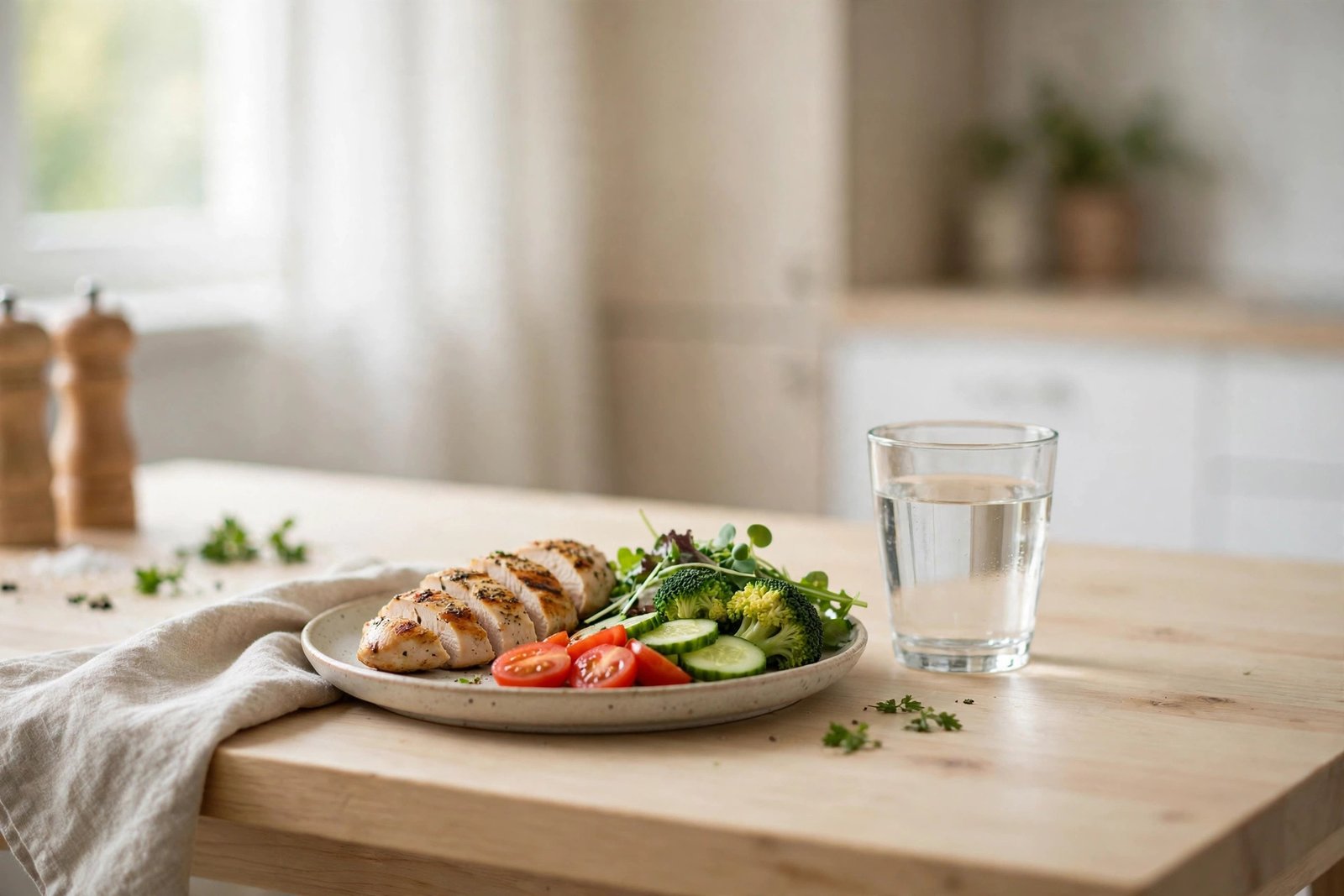
What should I eat on Ozempic? Eat small, protein-first meals built on lean protein, vegetables, fruit and whole grains, with steady fluids through the day. Eat slowly, stop at the first sign of fullness, and build fibre up gradually rather than all at once.
- In the STEP 1 trial, nausea affected 44.2% of people on semaglutide, vomiting 24.8%, diarrhoea 31.5% and constipation 23.4% (Wilding et al., 2021).
- A 2025 joint advisory from four obesity and nutrition societies recommends a small breakfast, then small meals every 3 to 4 hours, with plenty of fluids (Mozaffarian et al., 2025).
- Aim for 1.2 to 1.6 g of protein per kilogram of body weight a day, or 80 to 120 g a day in total, and eat the protein part of each meal first.
- Large meals make vomiting more likely, and fatty or fried food, very sweet food and alcohol make nausea worse.
- Worked example: an 85 kg woman, moderately active, needs about 102 g of protein a day inside a target of about 1,936 calories, and the sample day below reaches about 116 g.
Introduction
Ozempic is the brand name for semaglutide at the doses used for type 2 diabetes, and the same medicine at a higher weekly dose is sold as Wegovy for weight management. This post uses the name most people search for, and the eating advice applies to the whole group of GLP-1 medicines, including Mounjaro and Zepbound. Our guide to GLP-1 weight loss explained covers how these medicines work.
People starting a GLP-1 usually ask what they can eat without feeling sick, how to get enough protein when they are barely hungry, and what to do on injection day, when nausea is often worst. This post answers those three questions, with a full sample day at the end. It is general information, not medical advice.
Why Food Feels Different Now
GLP-1 medicines copy a gut hormone that tells your brain you have eaten. They slow how fast food leaves the stomach and reduce appetite. A 2025 joint advisory reports that these medicines reduce energy intake by 16% to 39% compared with placebo (Mozaffarian et al., 2025).
Eating less is how the weight comes off, but eating much less makes it easy to miss protein, fibre and fluids. In the STEP 1 trial, 1,961 adults took semaglutide 2.4 mg weekly for 68 weeks and lost an average of 14.9% of their body weight, against 2.4% on placebo (Wilding et al., 2021). The side effects were nausea 44.2%, diarrhoea 31.5%, vomiting 24.8% and constipation 23.4%.
Two details matter for the plate. Nausea is the most common gut side effect and often occurs in the morning or after longer periods without eating, which is why skipping meals can make it worse. Vomiting is more likely with large meals, which is why portion size matters more than it used to (Mozaffarian et al., 2025).
The Four Rules That Make Eating Easier
Most of the advice in this post follows from four rules, taken from the 2025 advisory.
Rule 1: Small meals, more often
The advisory suggests a small breakfast, then small meals every 3 to 4 hours, with adequate fluids. It also notes that some people get caught in a cycle of not eating because of nausea, which worsens the symptoms (Mozaffarian et al., 2025).
Rule 2: Protein first
When appetite is low, the order you eat food in matters: eat the protein part of the meal first, so that if you fill up early, you have already eaten the nutrient that protects your muscle. The advisory proposes 1.2 to 1.6 g of protein per kilogram a day, or 80 to 120 g a day (Mozaffarian et al., 2025). The reason is in the STEP 1 data: of the average 13.6 kg lost, 38% was lean body mass.
Rule 3: Build fibre slowly
Fibre helps with constipation, but a sudden jump makes bloating and wind worse. The advisory suggests avoiding fatty or high-fibre foods during the first few days of treatment, then increasing fibre gradually (Mozaffarian et al., 2025). The UK guideline is 30 g of fibre a day for adults, with 6 to 8 cups of fluid a day (NHS, 2023). Add about 5 g a week.
Rule 4: Sip fluids through the day
Reduced appetite usually means reduced thirst too, so dehydration is easy to miss. The advisory warns that dehydration from severe nausea, vomiting or diarrhoea can cause acute kidney injury (Mozaffarian et al., 2025). Keep water where you can see it and sip little and often. If you cannot keep fluids down, contact your prescriber.
What to Eat on Injection Day
Injection day is the day most people feel worst, and the day the eating rules matter most. Side effects are most likely during initiation and dose increases, and they tend to ease at a stable dose (Mozaffarian et al., 2025).
Eat a small, plain breakfast before the injection rather than injecting on an empty stomach: plain yoghurt with a little fruit, or toast with an egg, is enough. After the injection, eat little and often, a small meal every 3 to 4 hours, bland and low in fat, with water sipped through the day. Crackers, toast, rice, broth-based soups, bananas, plain yoghurt, eggs and simple lean proteins are the easiest foods when you feel queasy. Avoid the foods in the avoid list below on injection day, and avoid alcohol, which may worsen nausea and reflux (Mozaffarian et al., 2025). If you feel sick in the evening, a small plain snack is usually better than going to bed on an empty stomach.
A Full Day of Eating on Ozempic
Here is a full day for the same person our other guides use: a woman aged 40, 165 cm tall, 85 kg, moderately active, burning about 2,436 calories a day, with a weight loss target of about 1,936 calories a day. Her protein number comes from our protein intake calculator: 85 kg times 1.2 g/kg equals 102 grams of protein a day.
| Meal | What it is | Protein | Calories |
|---|---|---|---|
| Breakfast | 170 g plain Greek yoghurt with 40 g oats and 100 g raspberries | 22 g | 300 kcal |
| Mid-morning | 1 slice wholemeal toast with 2 tablespoons peanut butter | 11 g | 270 kcal |
| Lunch | 100 g grilled chicken with salad, 150 g brown rice and 1 tablespoon olive oil | 35 g | 450 kcal |
| Afternoon | 100 g plain Greek yoghurt with a medium pear | 10 g | 160 kcal |
| Dinner | 100 g salmon with 100 g lentils, vegetables and 1 teaspoon olive oil | 31 g | 410 kcal |
| Evening | 200 ml semi-skimmed milk | 7 g | 90 kcal |
| Total | 6 small meals | 116 g | 1,680 kcal |
The day adds to about 116 g of protein and about 1,680 calories, with about 30 g of fibre. That is a little over her 102 g protein target, and about 250 calories below her 1,936 calorie target, which is expected while appetite is low: the advisory reports that energy intake falls by 16% to 39% on these medicines (Mozaffarian et al., 2025). Work out your own numbers with our calories calculator before copying this day.
How to Hit Your Protein With Little Appetite
Protein is the hardest part of eating on a GLP-1, because it is the nutrient you need most and the one your appetite fights hardest. The daily range is 1.2 to 1.6 g per kilogram, and the advisory offers an absolute target of 80 to 120 g a day (Mozaffarian et al., 2025). For the 85 kg worked example that is 102 to 136 g a day, and the sample day above reaches about 116 g. Our guide to losing muscle on a GLP-1 and how to keep it covers the training side.
Four habits make the number reachable. First, eat protein first at every meal. Second, choose foods that pack protein into a small volume: Greek yoghurt at about 17 g per 170 g serving, cottage cheese at about 12 g per 100 g, eggs at about 6 g each, and chicken or fish at about 31 g and 22 g per 100 g. Third, spread it across the day: three meals at 25 to 30 g each (Leidy et al., 2015). Fourth, keep one no-cook protein ready for bad days.
The mistake to avoid is cutting protein to save calories: 100 g of protein is 400 calories, but cutting protein while you eat less is how muscle is lost, and muscle is what keeps your daily burn up. If you have kidney disease, talk to your doctor before raising your protein intake.
Foods That Make Nausea Worse
There is no single banned list, because tolerance varies, and many people find theirs improves after they settle into a stable dose.
Fatty and fried food
Fat slows stomach emptying further, and on a medicine that already slows it, fatty meals reliably worsen nausea. Fried chicken, chips, creamy sauces, pastry, fatty cuts of meat and fast food are the usual triggers. The advisory suggests avoiding fatty foods during the first few days of treatment (Mozaffarian et al., 2025). Grilled, baked or steamed food is easier than fried food.
Large portions of anything
Overfilling a slow-emptying stomach is the fastest way to feel sick, bloated or get reflux, and vomiting is more likely with large meals (Mozaffarian et al., 2025). Serve half of what you used to, wait, and then decide.
Very sweet food and drinks
Very sweet foods and sugar-sweetened drinks are common triggers: the advisory lists refined carbohydrates, sugar-sweetened beverages, sweets and savoury snacks among the foods to minimise (Mozaffarian et al., 2025).
Alcohol
Alcohol may worsen nausea and reflux with GLP-1 therapy and should be minimised (Mozaffarian et al., 2025).
Fibre, Fluids and Constipation
Constipation affected 23.4% of people on semaglutide in STEP 1, and it is the side effect most likely to linger after nausea fades (Wilding et al., 2021). It has two causes that food can fix: slower movement through the gut, and eating and drinking less (Mozaffarian et al., 2025).
The practical plan is simple: aim for about 30 g of fibre a day, build it up by about 5 g a week, and drink 6 to 8 cups of fluid a day (NHS, 2023). The sample day above reaches about 30 g from oats, raspberries, brown rice, a pear and lentils. Our dietary fibre intake calculator works out your own daily target. Fibre without fluid can make constipation worse, because fibre absorbs water in the gut.
Common Mistakes With Eating on Ozempic
Skipping meals because you are not hungry
Skipping meals feels logical when you are not hungry, but it makes nausea worse, because nausea often occurs after longer periods without eating, and it makes the next meal larger (Mozaffarian et al., 2025). Eat something small every 3 to 4 hours even when you do not feel hungry.
Eating too little to protect muscle
Some people eat 800 or 900 calories a day on a GLP-1 and treat it as a success. It is not a success: at that level you cannot cover protein, fibre and fluids, and the weight you lose includes more muscle.
When to Talk to Your Prescriber
Most gut side effects on a GLP-1 are mild, transient and manageable with the food changes in this post, and they tend to ease once you stay at a stable dose. But some situations need a clinician, not a food tweak. Contact your prescriber if you cannot keep food or fluids down, if vomiting or diarrhoea lasts more than a day, if you notice signs of dehydration such as very little urine, dizziness or a racing heart, or if you have severe or persistent stomach pain. Seek urgent care for severe symptoms. Never change your own dose, skip doses to manage side effects, or stop the medicine without discussing it with your prescriber.
Frequently Asked Questions
What should I eat on Ozempic?
Small, protein-first meals built on lean protein, vegetables, fruit and whole grains, with steady fluids through the day. Eat slowly and stop at the first sign of fullness.
What should I eat on injection day?
Eat a small, plain breakfast before the injection, then small, bland, low-fat meals every 3 to 4 hours, with water sipped through the day. Avoid fatty food, large portions and alcohol on that day.
How much protein should I eat on Ozempic?
Aim for 1.2 to 1.6 g of protein per kilogram of body weight a day, or 80 to 120 g a day in total. For an 85 kg person that is about 102 g a day, or about 25 to 30 g at each meal.
What foods make nausea worse on Ozempic?
Fatty and fried food, large portions, very sweet food and drinks, and alcohol are the common triggers. Large meals make vomiting more likely, so serve half portions and wait before eating more.
Can I eat bread and rice on Ozempic?
Yes. Wholemeal bread, oats, brown rice and other whole grains fit the plan well and help you reach 30 g of fibre a day. Keep portions small and build fibre up by about 5 g a week.
—
Sources
- Wilding JPH, Batterham RL, Calanna S, et al. N Engl J Med. 2021;384(11):989-1002. STEP 1: 1,961 adults, semaglutide 2.4 mg, minus 14.9% vs minus 2.4% placebo at 68 weeks; nausea 44.2%, vomiting 24.8%, diarrhoea 31.5%, constipation 23.4%; GI discontinuation 4.5% vs 0.8%. https://pubmed.ncbi.nlm.nih.gov/33567185/
- Mozaffarian D, Agarwal M, Aggarwal M, et al. Obesity (Silver Spring). 2025;33(8):1475-1503. Joint advisory from the American College of Lifestyle Medicine, the American Society for Nutrition, the Obesity Medicine Association and The Obesity Society. https://pmc.ncbi.nlm.nih.gov/articles/PMC12304835/
- Leidy HJ, Clifton PM, Astrup A, et al. Am J Clin Nutr. 2015;101(6):1320S-1329S. 1.2 to 1.6 g/kg a day; at least 25 to 30 g protein per meal. https://pubmed.ncbi.nlm.nih.gov/25926512/
- NHS. How to get more fibre into your diet. 30 g of fibre a day for adults, increase gradually, 6 to 8 cups of fluid a day. https://www.nhs.uk/content-widgets/live-well/eat-well/digestive-health/how-to-get-more-fibre-into-your-diet
- USDA FoodData Central. Protein and calorie content of Greek yoghurt, eggs, chicken breast, salmon, lentils, cottage cheese, oats, raspberries, peanut butter, olive oil and milk. https://fdc.nal.usda.gov/
- Weight Insider. GLP-1 weight loss explained, lose muscle on a GLP-1 and how to keep it, protein intake calculator, calories calculator, and dietary fibre intake calculator.
Last updated: 21 November 2026
Medical Disclaimer
This article is general information only. It is not medical advice, and it is not a substitute for advice from a qualified health professional. It does not tell you what dose of any medicine to take, or whether to start, stop, switch or taper any medicine. Talk to your doctor or prescriber before changing your diet or your medicine, especially if you have diabetes, kidney disease, or any other health condition, or if you are pregnant or breastfeeding.
3 thoughts on “What Should I Eat on Ozempic? A Day of Eating That Works”
Comments are closed.